
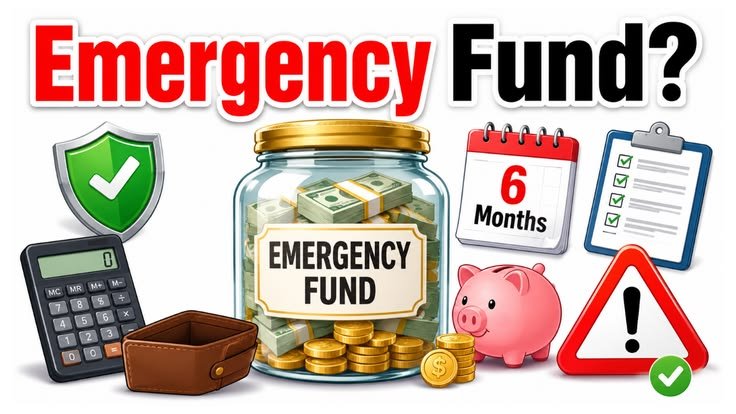
Our Life is unpredictable. A medical bill, job loss, urgent home repair, family emergency and unexpected travel expense can put pressure on your finances. This is where an emergency fund becomes important.
An emergency fund is money kept separately to handle genuine financial emergencies without depending on credit cards, personal loans, or selling long-term investments.
What Is an Emergency Fund?

An emergency fund is a dedicated cash reserve set aside strictly for unplanned expenses or financial emergencies. Think of it as a financial safety net that protects you from life’s unexpected curveballs—such as a sudden job loss, urgent medical bills, major car repairs, or necessary home maintenance. Instead of treating it like a typical savings goal for a vacation or a new gadget, this money is reserved to ensure you can stay afloat during difficult times without disrupting your daily life.
The primary purpose of an emergency fund is to provide financial security and peace of mind by reducing your reliance on high-interest debt. When unexpected costs arise without a cash cushion, many people are forced to rely on credit cards, personal loans, or retirement account withdrawals, which can lead to long-term financial strain. By having cash readily available, you can handle emergencies seamlessly, keep your stress levels low, and protect your long-term financial health.
Financial experts generally recommend saving three to six months’ worth of living expenses, though the ideal amount depends on your job stability and lifestyle. This money should be kept in a safe, highly accessible account such as a High-Yield Savings Account (HYSA) or a money market account where it can earn competitive interest while remaining liquid enough to withdraw at a moment’s notice.
Why Is an Emergency Fund Important in 2026?

An emergency fund acts as a crucial financial safety net in 2026 by protecting you from sudden life disruptions like unexpected medical bills, urgent home or car repairs, or a sudden loss of income. In an environment where the cost of living and economic uncertainties remain high, having a dedicated pool of liquid cash ensures that a single crisis does not derail your daily life. Instead of scrambling for money when things go wrong, an accessible reserve gives you immediate relief and peace of mind.
Having this separate buffer also stops you from falling into high-cost debt. Without an emergency fund, unexpected expenses often force people to rely on high-interest credit cards, personal loans, or borrowing from others creating a long-term debt cycle that is hard to escape. It also prevents you from being forced to prematurely liquidate long-term investments like retirement funds or stocks at a market loss just to cover an immediate, short-term crisis.
Furthermore, an emergency fund provides critical career and personal flexibility. If you face a sudden layoff or decide to transition out of a toxic work environment, having three to six months or more of essential living expenses saved buys you the time needed to make thoughtful choices. You can search for a proper role rather than accepting the very first stressful job offer out of sheer desperation.
How Much Money Should You Save?

A common and effective baseline is the 50/30/20 rule, which suggests putting 50% of your take-home pay toward needs (like rent and food), 30% toward wants like entertainment and saving or investing at least 20%. Instead of using a strict flat percentage, many financial planners recommend building a dedicated emergency fund that covers 3 to 6 months of essential living expenses. If saving 20% feels too difficult right away, you can start small such as saving 1% to 5% of your income or setting aside a small fixed amount like ₹2,000 per month and increase it gradually over time.
Your exact target should ultimately depend on your short-, medium-, and long-term goals rather than a generic rule. Short-term goals include rainy-day funds or a nearby vacation, medium-term goals include a car down payment or a wedding, and long-term goals focus heavily on retirement (where aiming for 10% to 15% of your income is standard). Evaluating your future needs backward by calculating the real cost and timeline of milestones like buying a home or funding an education lets you tailor your monthly savings rate to fit your lifestyle
How to Build an Emergency Fund on a Low Salary

You do not need a high salary to start building emergency savings. The most important factors are consistency and discipline. First, calculate your monthly income and essential expenses, including rent, groceries, transport, utility bills, and necessary medicines. Then decide how much you can save every month. For example, saving ₹1,000 monthly will help you accumulate ₹12,000 in one year, excluding any interest earned. If possible, set up an automatic transfer to your savings account immediately after receiving your salary. Reduce unnecessary spending, compare prices before shopping, and direct bonuses or additional income towards your savings goal. Review your monthly savings plan regularly and increase your contributions whenever your income improves. Remember, building an emergency fund is a gradual process, not a competition.
Building an emergency fund on a tight budget is entirely possible by focusing on consistency over amount. The primary goal is to shift your mindset from trying to save large, overwhelming sums to automating small, regular contributions. By treating savings as a non-negotiable monthly bill, you can gradually accumulate a financial cushion without straining your daily living expenses. Starting with a modest target, such as $500 to $1,000, provides an immediate safety net for minor crises like car repairs or medical co-pays, breaking the stressful cycle of relying on high-interest credit cards.
The most effective strategy to achieve this is micro-saving through automation. You can set up an automatic transfer of just $5 to $10 a week into a dedicated, separate High-Yield Savings Account (HYSA). Because this account is kept at a different bank from your daily checking account, it removes the temptation to spend your savings on non-emergencies. Over time, these small, barely noticeable amounts accumulate and compound. Additionally, you can accelerate your progress by channeling unexpected windfalls—such as tax refunds, work bonuses, or cash gifts—directly into this fund before you have a chance to spend them.
To sustain this momentum, it is crucial to audit your expenses and actively look for “hidden cash” within your current spending. Reviewing your bank statements can reveal subscription services you no longer use or areas where you can trim variable costs, like dining out or grocery bills. Redirecting these clawed-back funds straight into your emergency savings transforms found money into long-term financial security. Remember that building financial resilience is a marathon, not a sprint; every single dollar you save creates a buffer between you and financial distress.
Where Should You Keep Your Emergency Savings?

You should keep your emergency savings in a mix of high-liquidity and low-risk options—such as a dedicated savings account, sweep-in fixed deposits, or liquid/arbitrage mutual funds rather than high-risk stocks or idle cash.
A smart strategy uses a layered or tiered approach to balance instant access with modest returns. You can keep about one month of essential expenses in a standard or high-interest savings account or linked digital account for immediate UPI, ATM, or net-banking withdrawals during urgent shocks like medical bills. Keeping this reserve in a separate bank account also stops you from accidentally spending it on routine daily costs.
For the remaining portion of your 3-to-6-month safety net, you can deploy short-term instruments that offer better inflation-beating yields without sacrificing safety. Options like sweep-in fixed deposits, liquid funds, or arbitrage funds allow you to earn higher interest while maintaining quick T+1 or T+2 liquidity. Splitting the funds this way ensures you are never forced to break long-term investments or incur heavy penalties when an unexpected crisis hits.
Common Emergency Fund Mistakes to Avoid

- Saving Too Little or Too Much: Many people fail to build a fund that covers the recommended 3 to 6 months of essential living expenses, leaving them vulnerable during a job loss or medical crisis. Conversely, keeping an excessive amount of cash in low-interest accounts for decades can hurt long-term growth and lose purchasing power to inflation.
- Investing in Volatile Assets: Putting your emergency cash into stocks, equity mutual funds, or high-risk crypto exposes you to severe market drops. If a market crash hits at the same time you lose your job, you will be forced to sell your investments at a major loss. Stick to high-yield savings accounts, liquid mutual funds, or short-term fixed deposits.
- Using the Fund for Non-Emergencies: Dipping into your safety net for planned or discretionary expenses—such as vacations, holiday shopping, tech upgrades, or routine car maintenance—defeats its true purpose. Regular predictable costs should be handled through a separate sinking fund rather than your emergency cash.
- Failing to Replenish or Review the Fund: After using money for a real crisis, many people forget to prioritize refilling the balance. Additionally, failing to adjust your target amount as your family size, rent, income, or medical responsibilities change means your safety net will quietly shrink in real terms.
Conclusion
Building an emergency fund in India in 2026 is a practical step towards financial security. Start by calculating your essential expenses, setting a realistic savings target, and putting aside a fixed amount every month. Keep your savings in a safe and accessible place, and use the money only for genuine emergencies. You do not need to save a large amount overnight; small, regular contributions can make a meaningful difference over time. Start today, stay consistent, and make emergency savings an essential part of your personal finance strategy.