
Best Cafes in Amritsar: 7 Must-Visit Cafes in Amritsar

Looking for the Best Cafes in Amritsar to enjoy a cup of coffee, food and a relaxing atmosphere? Amritsar is famous for its rich culture, traditional Punjabi cuisine and historical attractions, but its modern cafe culture is equally worth exploring. From specialty coffee shops to stylish cafes serving pizzas, sandwiches, desserts and refreshing beverages, the city has something for everyone. Whether you want to spend time with friends, plan a casual date or take a break from your busy schedule, exploring the best cafes in Amritsar can make your day more enjoyable. In this blog, we will explore seven popular cafes in Amritsar, their unique features and what you should consider before choosing your next cafe destination. 1. Doubleshot Coffee Roasters Doubleshot Coffee Roasters in Amritsar is a masterclass in specialty coffee, seamlessly blending artisanal craftsmanship with a deeply welcoming, community-first atmosphere. Far more than just a place to grab your daily caffeine fix, this standout roastery meticulously sources high-quality beans and roasts them in-house to absolute perfection, unlocking complex, vibrant flavor profiles that cater to both seasoned connoisseurs and casual coffee lovers alike. Every cup tells a story of precision from the exact science of their espresso extraction to the ritualistic art of their manual pours. Stepping into their space feels like entering a sanctuary where passion meets hospitality; the aroma of freshly ground coffee fills the air, while the knowledgeable baristas elevate the entire experience with their genuine warmth and expertise. For anyone seeking an authentic, uncompromising specialty coffee experience in the heart of Punjab, Doubleshot Coffee Roasters isn’t just a recommendation it is an absolute destination. The cafe is known for its focus on coffee, making it a suitable option for those who prefer espresso-based beverages and freshly prepared drinks. You can consider it for a casual coffee break, a conversation with friends or a relaxed outing. Why visit Doubleshot Coffee Roasters? If you are searching for the best coffee shops in Amritsar, Doubleshot Coffee Roasters deserves a place on your list, It is also budget friendly cafe as well. you should visit this cafe once in your lifetime. 2. Pardeco Coffee Roasters Pardeco Coffee Roasters is a breath of fresh air in Amritsar’s bustling cafe scene, seamlessly blending a stunning aesthetic with serious, top-tier coffee craftsmanship. Instantly recognizable by its sophisticated, clean interiors and curation of art and lifestyle details, it is far more than just an Instagram-worthy spot it is a sanctuary for true coffee purists. Every brew tells a story of meticulous roasting and precision extraction, making it the ultimate destination for anyone who values a perfectly balanced cup. Whether you are searching for a quiet, inspiring workspace, a curated lifestyle aesthetic, or simply the best specialty espresso in the city, Pardeco Coffee Roasters sets a new benchmark for Amritsar’s modern cafe culture. The location also makes it convenient for people exploring the surrounding shopping and dining areas. You can visit with friends or take some time out of your day to enjoy a refreshing drink. What makes it worth considering? Before visiting, check the latest menu and prices to choose something that suits your preferences and budget. Also this is one of the most premium cafe in guru ki nagri Amritsar, must visiting place. 3. TAN Coffee TAN Coffee isn’t just your average morning pick-me-up it is a bold, masterfully crafted sensory experience designed for true coffee purists. Sourced from the finest globally selected beans and roasted to absolute perfection, every cup delivers a rich, full-bodied profile that strikes the ultimate balance between deep, comforting warmth and an invigorating burst of energy. Whether you are kickstarting a high-octane workday or savoring a slow, mindful weekend ritual, TAN Coffee elevates the standard of your daily brew, transforming a simple routine into an extraordinary daily luxury. Whether you want to meet a friend, catch up with colleagues or simply enjoy a coffee break, TAN Coffee can be an option to explore. Its location in a popular commercial area also makes it convenient to combine a cafe visit with shopping or other activities. Reasons to consider TAN Coffee: If you are creating a list of cafes in Amritsar, TAN Coffee is worth comparing with other nearby options and also it’s budget friendly cafe as well specially for school and collage students 4. Foresta Cafe and Roasters Foresta Cafe and Roasters has firmly established itself as one of the premier culinary and coffee destinations in Amritsar. Located on the 1st floor, SCO 138 in the D-Block of Ranjit Avenue, this pure vegetarian gem is celebrated for its perfect 5.0 customer rating across platforms. By bringing Amritsar’s first Italian Barista Academy to the city, the café showcases an unyielding commitment to premium coffee craftsmanship, utilizing 100% Arabica beans that are expertly slow-roasted in small batches from the Bison Valley Estate. Step inside and you are immediately greeted by a cozy, forest-inspired aesthetic framed by refined décor, warm lighting, and vibrant live music. Whether you are sinking into a comfortable corner for a romantic date, setting up a remote laptop workspace, or digging into fresh artisanal options like avocado toast and gourmet desserts, the hands-on service guided by the owner ensures a world-class experience that positions Foresta right at the top of the town’s café culture. A cafe’s atmosphere can make a significant difference to your experience. Some visitors prefer lively surroundings, while others look for a comfortable place where they can relax and have conversations. Considering your preferences before visiting can help you select the right destination. What can you consider when visiting Foresta Cafe and Roasters? For visitors searching for Amritsar cafes with good ambience, Foresta Cafe and Roasters is one option to explore. 5. Coffee in Hand Coffee in Hand is a premier standout in Amritsar’s buzzing specialty coffee scene, firmly establishing itself as a favorite sanctuary for local caffeine aficionados and foodies alike. Located in the trendy hub of Ranjit Avenue, this cafe expertly bridges the gap between premium brew craftsmanship and a welcoming,
UPI Scams in India in 2026: How to Protect Your Money

UPI fraud in India relies heavily on social engineering, urgency, and deceptive UI tricks rather than breaking the core technology. Scammers commonly use the “Scan to Receive” trap, where they claim you must scan a QR code to collect a refund, reward, or cashback. In reality, scanning a QR code and typing your UPI PIN always debits money from your account rather than crediting it. Other prevalent schemes include fake collect requests disguised as incoming payments and impersonation calls where fraudsters pose as bank staff, utility providers, or law enforcement running “digital-arrest” tactics. Protecting your money begins with adhering to non-negotiable UPI safety rules. Never enter your UPI PIN or scan a QR code to receive money receiving funds requires zero action or PIN entry on your end. Always double-check the recipient’s name, handle, and exact amount on your screen before authorizing any transaction. Avoid sharing sensitive credentials like your UPI PIN, OTP, or banking passwords with anyone, and never grant screen-sharing or remote-access app permissions (such as Any Desk or TeamViewer) to unknown callers. If you fall victim to a UPI scam or spot unauthorized activity, immediate action can help recover your funds. Report the incident within the “golden hour” (the first 1 to 2 hours) by calling the national cybercrime helpline at 1930 or filing a formal complaint on the National Cybercrime Reporting Portal. Simultaneously, block your UPI ID and notify your bank or payment app support team immediately to freeze the transaction. What Are UPI Scams and Why Are They Increasing? Unified Payments Interface (UPI) scams are fraudulent schemes where cybercriminals trick users into unauthorized money transfers using digital payment apps. Because UPI allows instant, bank-to-bank transfers using just a virtual ID or QR code, scammers exploit this speed and simplicity through tactics like fake payment links, spoofed QR codes, and malicious collect requests. Unlike traditional banking frauds that require complex technical hacking, UPI scams heavily rely on social engineering, manipulate human psychology, and deceive users into willingly authenticating transactions or sharing their secret UPI PINs. The alarming rise in these scams is primarily driven by the explosive, widespread adoption of digital payments alongside low digital literacy. Millions of new users, particularly in rural or semi-urban areas, have rapidly transitioned to digital transactions without fully understanding the underlying security protocols. Scammers take advantage of this knowledge gap by convincing victims that entering their UPI PIN is required to receive money, cashbacks, or lottery winnings. Since UPI apps are designed to execute transfers in milliseconds with zero friction, once a victim falls for the ruse and enters their PIN, the money is permanently gone before they even realize they have been defrauded. Furthermore, fraudsters have developed highly sophisticated psychological manipulation tactics and identity spoofing techniques that bypass traditional security awareness. Criminals create immense pressure by posing as bank officials, tax authorities, or customer support agents, using panic or greed to force immediate compliance. They also leverage advanced tools like deepfake voices, artificial intelligence to draft hyper-convincing phishing messages, and spoofed merchant interfaces that look identical to trusted brands. This evolution from crude phishing emails to highly targeted, technologically enhanced social engineering makes it incredibly difficult for the average smartphone user to distinguish between a legitimate request and a malicious trap. Common Types of UPI Scams in India UPI scams in India frequently exploit human psychology through social engineering rather than technical hacking, with phishing and fake links being among the most common tactics. Scammers often send fraudulent SMS messages or WhatsApp alerts disguised as urgent notifications from banks, electricity boards, or courier services. These messages contain malicious links that direct victims to cloned websites designed to steal UPI PINs, bank details, or download malware that intercepts mobile data. Additionally, fraudsters trick users into clicking “Request Money” links instead of “Receive Money,” misleading individuals into authorizing outbound transfers while under the impression they are accepting a payment or prize. Another prevalent tactic involves impersonation and fraudulent helpline numbers planted across the internet to exploit users seeking customer support. Scammers heavily manipulate search engine results by listing fake contact numbers for popular e-commerce platforms, airlines, or digital wallets. When a distressed user calls for assistance with a stuck transaction or refund, the fraudster impersonates a customer care representative. They then convince the victim to install screen-sharing applications like AnyDesk or TeamViewer, allowing the scammer to gain full remote control of the mobile device, view the UPI app interface, and surreptitiously drain the linked bank accounts. The rise of marketplace fraud, fake job offers, and advanced investment scams has resulted in severe financial losses for unsuspecting users. On peer-to-peer buying and selling platforms, scammers pose as legitimate buyers—frequently claiming to be military personnel to build instant trust—and send QR codes for the seller to scan, which ultimately debits money from the seller’s account. Concurrently, a growing wave of part-time “task scams” and fraudulent cryptocurrency trading platforms lure individuals with promises of high daily returns. Once the victim is hooked, they are instructed to transfer large sums via UPI into various mule accounts, only to find their funds completely frozen and untraceable. Never Share Your UPI PIN, OTP, or Banking Details Practical Ways to Protect Your Money from UPI Fraud Protect your hard-earned money from UPI fraud by securing your Unified Payments Interface (UPI) PIN and treating it with the same confidentiality as an ATM password. Your UPI PIN is only required to send or authorize money, never to receive it. Scammers frequently use trickery—like fake “cashback” offers, refund requests, or urgent lottery wins to dupe users into entering their PINs on malicious links. Always verify the sender’s identity, carefully review the transaction amount before approving, and never share your PIN, OTP, or passwords with anyone, including individuals claiming to be bank officials. Defend your digital footprint by avoiding unverified third-party apps, suspicious links, and public Wi-Fi networks when making financial transactions. Fraudsters often distribute screen-sharing applications or malware disguised as customer support tools to gain remote access to your device.
How to Build an Emergency Fund in India in 2026
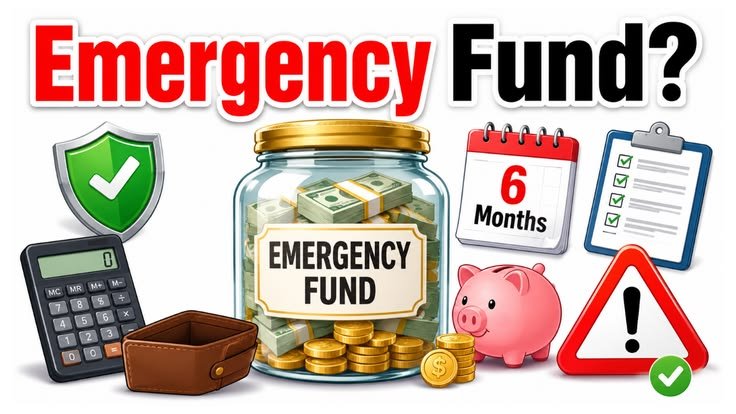
Our Life is unpredictable. A medical bill, job loss, urgent home repair, family emergency and unexpected travel expense can put pressure on your finances. This is where an emergency fund becomes important. An emergency fund is money kept separately to handle genuine financial emergencies without depending on credit cards, personal loans, or selling long-term investments. What Is an Emergency Fund? An emergency fund is a dedicated cash reserve set aside strictly for unplanned expenses or financial emergencies. Think of it as a financial safety net that protects you from life’s unexpected curveballs—such as a sudden job loss, urgent medical bills, major car repairs, or necessary home maintenance. Instead of treating it like a typical savings goal for a vacation or a new gadget, this money is reserved to ensure you can stay afloat during difficult times without disrupting your daily life. The primary purpose of an emergency fund is to provide financial security and peace of mind by reducing your reliance on high-interest debt. When unexpected costs arise without a cash cushion, many people are forced to rely on credit cards, personal loans, or retirement account withdrawals, which can lead to long-term financial strain. By having cash readily available, you can handle emergencies seamlessly, keep your stress levels low, and protect your long-term financial health. Financial experts generally recommend saving three to six months’ worth of living expenses, though the ideal amount depends on your job stability and lifestyle. This money should be kept in a safe, highly accessible account such as a High-Yield Savings Account (HYSA) or a money market account where it can earn competitive interest while remaining liquid enough to withdraw at a moment’s notice. Why Is an Emergency Fund Important in 2026? An emergency fund acts as a crucial financial safety net in 2026 by protecting you from sudden life disruptions like unexpected medical bills, urgent home or car repairs, or a sudden loss of income. In an environment where the cost of living and economic uncertainties remain high, having a dedicated pool of liquid cash ensures that a single crisis does not derail your daily life. Instead of scrambling for money when things go wrong, an accessible reserve gives you immediate relief and peace of mind. Having this separate buffer also stops you from falling into high-cost debt. Without an emergency fund, unexpected expenses often force people to rely on high-interest credit cards, personal loans, or borrowing from others creating a long-term debt cycle that is hard to escape. It also prevents you from being forced to prematurely liquidate long-term investments like retirement funds or stocks at a market loss just to cover an immediate, short-term crisis. Furthermore, an emergency fund provides critical career and personal flexibility. If you face a sudden layoff or decide to transition out of a toxic work environment, having three to six months or more of essential living expenses saved buys you the time needed to make thoughtful choices. You can search for a proper role rather than accepting the very first stressful job offer out of sheer desperation. How Much Money Should You Save? A common and effective baseline is the 50/30/20 rule, which suggests putting 50% of your take-home pay toward needs (like rent and food), 30% toward wants like entertainment and saving or investing at least 20%. Instead of using a strict flat percentage, many financial planners recommend building a dedicated emergency fund that covers 3 to 6 months of essential living expenses. If saving 20% feels too difficult right away, you can start small such as saving 1% to 5% of your income or setting aside a small fixed amount like ₹2,000 per month and increase it gradually over time. Your exact target should ultimately depend on your short-, medium-, and long-term goals rather than a generic rule. Short-term goals include rainy-day funds or a nearby vacation, medium-term goals include a car down payment or a wedding, and long-term goals focus heavily on retirement (where aiming for 10% to 15% of your income is standard). Evaluating your future needs backward by calculating the real cost and timeline of milestones like buying a home or funding an education lets you tailor your monthly savings rate to fit your lifestyle How to Build an Emergency Fund on a Low Salary You do not need a high salary to start building emergency savings. The most important factors are consistency and discipline. First, calculate your monthly income and essential expenses, including rent, groceries, transport, utility bills, and necessary medicines. Then decide how much you can save every month. For example, saving ₹1,000 monthly will help you accumulate ₹12,000 in one year, excluding any interest earned. If possible, set up an automatic transfer to your savings account immediately after receiving your salary. Reduce unnecessary spending, compare prices before shopping, and direct bonuses or additional income towards your savings goal. Review your monthly savings plan regularly and increase your contributions whenever your income improves. Remember, building an emergency fund is a gradual process, not a competition. Building an emergency fund on a tight budget is entirely possible by focusing on consistency over amount. The primary goal is to shift your mindset from trying to save large, overwhelming sums to automating small, regular contributions. By treating savings as a non-negotiable monthly bill, you can gradually accumulate a financial cushion without straining your daily living expenses. Starting with a modest target, such as $500 to $1,000, provides an immediate safety net for minor crises like car repairs or medical co-pays, breaking the stressful cycle of relying on high-interest credit cards. The most effective strategy to achieve this is micro-saving through automation. You can set up an automatic transfer of just $5 to $10 a week into a dedicated, separate High-Yield Savings Account (HYSA). Because this account is kept at a different bank from your daily checking account, it removes the temptation to spend your savings on non-emergencies. Over time, these small, barely noticeable amounts accumulate and compound. Additionally, you can accelerate your progress
UPI Charges in 2026: Will You Have to Pay for UPI Payments Above ₹2,000?

In today’s time, Consumers will not have to pay any extra charges or fees for UPI payments above ₹2,000 made through standard bank apps. Starting October 15, National Payments corporation of India (NPCI) guidelines ensure that regular users sending money via QR codes or online checkouts face zero surcharges. If you buy items worth more than ₹2,000, your bank account is debited by the exact invoice amount. The new rules protect everyday buyers from bearing any direct digital transaction fees. The new rules introduce a Merchant Discount Rate known as MDR, which applies specifically to business owners rather than everyday shoppers. For standard merchant payments exceeding ₹2,000, businesses will pay a 0.4% processing fee. This fee is automatically deducted from the final settlement amount that goes into the merchant’s bank account. Government guidelines strictly prohibit shopkeepers and online sellers from passing this processing charge onto the customer. To protect small businesses, the framework includes clear exemptions and strict caps on these backend fees. Small merchants collecting up to ₹1 lakh per month through standard UPI QR codes are completely exempt from paying any MDR. For larger transactions over ₹75,000, the fee is capped at a maximum of ₹300 per transaction so that large commercial purchases do not trigger massive costs. This design keeps the system affordable for local vendors while recovering infrastructure maintenance expenses from larger commercial entities. Certain essential and high-volume sectors follow distinct fee structures under the updated 2026 policy. Categories like fuel, public utilities, railways, and insurance attract a flat ₹5 fee instead of the 0.4% rate for payments above ₹2,000. Meanwhile, capital market transactions involving mutual funds or stock purchases carry a minimal 0.02% charge. These targeted adjustments balance operational costs across different parts of the economy without disturbing everyday retail shopping. Everyday peer-to-peer transfers and low-value retail purchases remain entirely free for all users across the network. Any money sent directly to family or friends via P2P UPI handles incurs no charges regardless of the transferred amount. Furthermore, merchant payments valued at ₹2,000 or below continue under a zero-fee structure. The ecosystem preserves its core convenience for small everyday needs while creating a structured foundation for commercial sustainability. What Is the New UPI Charge Rule in 2026? Starting on October 15, 2026, the National Payments Corporation of India (NPCI) and the Ministry of Finance are introducing a revised Merchant Discount Rate (MDR) framework for specific high-value Unified Payments Interface (UPI) transactions. The headline change is a 0.4% MDR levied on eligible Person-to-Merchant (P2M) payments exceeding ₹2,000. This represents a significant pivot from the zero-MDR policy implemented since January 2020, which originally aimed to spark absolute mass digital adoption. The core objective behind this regulatory change is to fund backend infrastructure, enhance cybersecurity, and establish long-term commercial sustainability for the digital payments ecosystem. Crucially, everyday consumers will not face any direct UPI fees or surcharges under the new guidelines. The 0.4% processing fee applies strictly at the backend merchant settlement level. For instance, if you purchase a home appliance worth ₹10,000 using your standard bank-linked UPI app, you will pay exactly ₹10,000 out of pocket. The merchant’s bank handles the 0.4% calculation (which amounts to ₹40 in this scenario), deducting it from the payout the merchant receives. Banking institutions and payment service providers have been rigorously instructed not to permit merchants to pass this cost on to end consumers as a hidden or separate line item. Effective October 15, 2026, a new Merchant Discount Rate (MDR) framework applies strictly to Person-to-Merchant (P2M) commercial transactions. Under this rule, a standard 0.4% MDR will be levied on eligible merchant transactions exceeding ₹2,000, with the fee capped at ₹300 for high-value transactions of ₹75,000 and above. This cost is borne entirely within the merchant payment ecosystem; banks and digital payment apps are strictly prohibited from passing these charges onto customers. To protect small businesses and routine daily commerce, the rule includes extensive exemptions. Any merchant transaction of ₹2,000 or less remains free of MDR, which covers more than 95% of everyday UPI market volume. Furthermore, small neighborhood merchants under the P2PM category earning up to ₹1 lakh per month are completely exempt from these charges. Will Customers Actually Pay for UPI Payments Above ₹2,000? No, customers will not actually pay any direct fees for UPI payments above ₹2,000. The Ministry of Finance and the National Payments Corporation of India (NPCI) have explicitly clarified that the Unified Payments Interface remains completely free for consumers. Whether you are transferring money to a friend (Person-to-Person) or making a large purchase at a store, you will not see any additional transaction or platform fees added to your bill. The confusion stems from a new policy taking effect on October 15, 2026, which introduces a 0.4% Merchant Discount Rate (MDR) on select Person-to-Merchant (P2M) transactions exceeding ₹2,000. This fee is strictly an ecosystem-level cost levied on relatively larger businesses to help banks and payment providers fund infrastructure, cybersecurity, and operational maintenance. Furthermore, small vendors generating less than ₹1 lakh per month and routine peer-to-peer transfers are entirely exempt from this framework. While the government has legally prohibited businesses from passing this 0.4% fee on to consumers, there is a minor behavioral risk regarding how merchants react. Industry surveys, such as one conducted by Local Circles, indicate that if a merchant attempts to unofficially demand a surcharge to protect their margins on large bills, 76% of users would abandon UPI for that transaction, opting instead for cash or credit cards. However, in legitimate frameworks, customers remain fully protected, and the price of goods will stay identical regardless of the chosen payment method. What Happens to UPI Payments Above ₹2,000? On October 15, 2026, the National Payments Corporation of India (NPCI) is introducing a revised Merchant Discount Rate (MDR) framework for specified Person-to-Merchant (P2M) UPI payments exceeding ₹2,000. Under this update, a standard processing fee of 0.4% MDR will be levied on high-value retail business transactions, which is capped at ₹300 for massive payments of
FD vs Mutual Funds in 2026: Where Should You Put Your Money?

In my perspective, in the year 2026 choosing the right investment option can be difficult, especially when you want your money to grow while also protecting your savings. In India, Fixed Deposits (FDs) and Mutual Funds (MFs) are two popular investment choices. However, they work very differently in terms of risk, returns, liquidity and taxation. Investors are increasingly comparing Fixed Deposits (FDs) with Mutual Funds (MFs) because interest-rate movements and changing market conditions can affect the returns they receive. So, where should you put your money? The answer depends on your financial goals, risk tolerance and investment period. What Is a Fixed Deposit? Fixed Deposit is known as an FD, is an investment offered by large, medium and small banks and financial institutions where you deposit a specific amount of money for a predetermined period at a fixed interest rate. The biggest advantages of an FD is predictability. You generally know the interest rate and maturity amount when you invest. This makes FDs attractive to conservative investors who prioritize stability over higher potential returns. Fixed Deposit (FDs) can be suitable for emergency savings, short- to medium-term financial goals and investors who do not want to take market-related risks. However, the interest earned on an FD is taxable according to the applicable income-tax rules. What Are Mutual Funds? A mutual fund is a managed investment vehicle that pools money from many investors to purchase a diversified portfolio of securities, such as stocks, bonds, or short-term debt. When you buy a share or unit in a mutual fund, you own a small fraction of all the investments within that pool. This provides individual investors with built-in diversification, spreading risk across various companies and industries far more easily than buying individual stocks or bonds. Every fund is managed by a professional portfolio manager who researches and selects the assets, aiming to match the fund’s specific financial goals (like long-term growth or regular income). Mutual funds are highly liquid, meaning you can easily buy or sell your shares at the current Net Asset Value (NAV) at the end of each trading day. They offer an accessible, hands-off way for everyday individuals to invest in the financial markets. FD vs Mutual Funds: Which Offers Better Returns? When you compare FD vs mutual funds, it is important to understand that FD returns are generally fixed, while mutual-fund returns are market-linked. FD is safe whereas mutual funds are risky. For example, if you invest ₹2.5 lakhs in an FD, the interest rate determines the approximate maturity value. With an equity mutual fund, the value of your investment can rise or fall depending on market performance. Equity investments have offered higher long-term growth potential than traditional fixed income products, but they also carry significantly higher risk. Therefore, comparing an FD’s fixed interest rate directly with a mutual fund’s expected return is not an equal comparison. If your priority is capital stability, an FD may be more appropriate. If your objective is long-term wealth creation and you can tolerate volatility, equity mutual funds may be worth considering. What About Taxation in 2026? The year 2026 marks a transformative period for taxation, characterized by significant legal overhauls and restructuring aimed at administrative simplification. In India, the landmark rollout of the Income Tax Act, 2025 goes into effect on April 1, 2026, completely modernizing direct tax systems and condensing the country’s six-decade-old tax laws down to a more manageable framework. Concurrently, the United States experiences its own massive consolidation via the One Big Beautiful Bill Act (OBBBA). This sweeping U.S. legislation permanently cements the individual tax cuts originally introduced by the 2017 Tax Cuts and Jobs Act (TCJA), averting a massive scheduled sunset and providing long-term fiscal clarity for millions of households. For individual taxpayers under India’s New Tax Regime, which serves as the default filing structure, the basic tax exemption limit is set at ₹4 lakh. Incremental tax slabs scale from 5% to 30% for incomes exceeding ₹24 lakh. Middle-class workers receive substantial relief as a standard deduction of ₹75,000, combined with an enhanced Section 87A rebate, ensures that individual income up to ₹12.75 lakh incurs an effective tax liability of zero. To promote compliance rather than severe punishment, procedural timelines have also been relaxed; individuals are now granted an extended window until March 31 to submit revised tax returns upon payment of a nominal fee. Meanwhile, across the globe, the U.S. Internal Revenue Service (IRS) has deployed heavily adjusted thresholds for the 2026 tax year to align with macro inflation trends. Under the permanent OBBBA rules, the seven progressive federal tax brackets remain locked at 10% to 37%. For 2026, the standard deduction has climbed to $16,100 for single filers and $32,200 for married couples filing jointly. High-net-worth individual protections are also prominently expanded, as the lifetime estate and gift tax exemption threshold shifts permanently to $15 million per person ($30 million for joint filers), safeguarding multi-generational wealth transfers from reverting to previous historical minimums. On the corporate and investment side, major revisions aim to manage domestic transparency and limit aggressive high-risk speculation. In India’s equity markets, the Securities Transaction Tax (STT) on derivatives has officially increased—rising to 0.05% on futures and 0.15% on options premium—while corporate share buybacks are now universally taxed under capital gains to protect minority shareholders. Globally, corporate tax operations are seeing an aggressive push toward digitization, with tax authorities implementing automated, rule-based systems and stricter reporting mandates for cross-border financial data, virtual assets, and foreign holdings. Which One Is Better for Different Investors? There is no single investment that is best for everyone. An FD may be better if you: Mutual funds may be better if you: A young investor with a long investment horizon may consider allocating part of their portfolio to equity mutual funds, while keeping short-term or emergency money in safer instruments such as FDs or savings accounts. FD or Mutual Funds: Where Should You Put Your Money in 2026? The better question is not simply “FD or mutual funds?”
Gold Loans in India 2026

Gold loans are becoming increasingly popular in India in 2026 because they offer a quick and convenient way to access funds without selling valuable jewellery. Rising gold prices have increased the borrowing value of pledged gold, while banks and NBFCs have made the process faster and more accessible. Gold loans are commonly used for business needs, medical emergencies, education, weddings, and short-term household expenses. Their growing popularity is visible in lending data, with NBFC gold-loan portfolios rising sharply in 2026. For many borrowers, gold loans provide a practical alternative to unsecured personal loans when immediate cash is required. In 2026, lending against gold jewellery has been growing rapidly. According to RBI data reported in September 2026, loans against gold jewellery by NBFCs grew 68.5% year-on-year in July 2026. This raises an important question: Why are more Indians borrowing against their gold, and what should borrowers know before pledging their jewellery? Let’s understand how gold loans work, why they are becoming popular and the risks borrowers should consider. Why Are More Indians Choosing Gold Loans in 2026? One major reason is the significant increase in gold prices. When the value of pledged jewellery increases, borrowers may be able to obtain a larger loan against the same quantity of gold, subject to the lender’s applicable LTV rules. Recent data reported in 2026 showed that the average gold-loan ticket size reached around ₹1.96 lakh in FY2026, up 39% year-on-year. The increase reflects the higher value of gold as well as growing borrowing against it. Another reason is convenience. A borrower who already owns gold may be able to access secured credit without selling the jewellery. This can make a gold loan attractive when someone needs money quickly. Why Are Gold Loans Growing in India? There are several reasons behind the growing demand for gold-backed borrowing. 1. Rising Gold Prices Gold prices have increased significantly in recent years. As the value of gold rises, existing gold jewellery can provide borrowers with a larger potential borrowing base, subject to valuation and regulatory limits. 2. Gold Is Already Available in Many Households Unlike some other forms of collateral, gold jewellery may already be owned by a household. This means borrowers do not necessarily need to purchase a new asset before applying for a gold-backed loan. 3. Quick Access to Secured Credit Gold loans are secured by collateral. Depending on the lender and application, this can make the process relatively straightforward compared with some unsecured forms of borrowing. 4. Growing Formal Lending Gold-backed lending has become an increasingly important part of India’s formal credit market. RBI data reported in September 2026 showed strong year-on-year growth in NBFC lending against gold jewellery. This growth shows that gold loans are becoming an important financing option for some Indian borrowers. Gold Loans Can Provide Faster Access to Money Traditional loans can involve income documentation, credit checks and other eligibility requirements. Gold loans are secured by physical collateral, so the lending process can be comparatively straightforward. For households facing an urgent financial requirement, this can be useful. Gold loans are commonly considered for medical expenses, education, business working capital and other short-term needs. However, faster access to money does not mean that borrowers should ignore the cost of borrowing. Interest rates, processing fees, valuation charges, repayment conditions and other applicable charges should be checked carefully before taking the loan. What Are the Risks of Taking a Gold Loan? Although gold loans can provide quick liquidity, they are not risk-free. The most important risk is failure to repay the loan according to the agreed terms. If the borrower defaults, the lender may have the right to sell the pledged gold according to the applicable agreement and regulations. Borrowers should therefore compare the total borrowing cost rather than focusing only on the interest rate. They should understand the repayment schedule, late-payment charges, renewal conditions, auction rules and other fees. The RBI’s lending framework also requires lenders to follow rules concerning eligible collateral, ownership and lending practices. Is a Gold Loan Right for You in 2026? A gold loan can be useful when a person needs short-term funds and already owns eligible gold jewellery. Its secured nature and potential convenience can make it an alternative to some other forms of borrowing. However, borrowers should first calculate how much they actually need and whether they can comfortably repay the loan. Comparing banks and NBFCs, checking the total cost and understanding the consequences of missed payments are important steps. The growth of gold loans in India in 2026 shows how households are increasingly using existing gold assets to access credit. With gold prices remaining an important factor behind the trend, borrowing against gold may continue to attract consumers who need liquidity without immediately selling their jewellery.
50/30/20 Budget Rule: Does It Works in India?

The 50/30/20 rule is a simple budgeting method that divides your monthly income into three parts, needs 50%, wants 30% and savings 20%. Managing money sounds simple until monthly expenses, EMIs, rent, groceries, lifestyle spending and unexpected costs start competing for the same salary. This is where the 50/30/20 budget rule becomes popular. The idea is straightforward: spend 50% percent of your income on needs, 30% on your wants and 20% of your income goes to saving and investments. It offers a simple framework for people who want better control over their finances without tracking every single rupee. For many Indians, the answer depends on the income, city, family responsibilities, debt, and lifestyle and many more. people living in big Metro cities Mumbai, Delhi, Bengaluru and Hyderabad spend larger money on rent, while a person living with family may be able to save more than 20%. Rising living costs, education expenses, medical bills, and EMIs can also make the standard formula difficult to follow. The idea is simple: 50% of your income goes into your Needs 30% of your income goes into Wants 20% of your income goes into savings and financial goals But there is an important question for Indian households: Does the 50/30/20 rule actually work in India? The answer is: It can be a useful starting point, but it should not be treated as a fixed formula. Indian households have very different income levels, rent costs, family responsibilities, loan obligations and financial goals. Therefore, the right budget for one person may not work for another. Let’s understand the rule and how you can adapt it to an Indian lifestyle. What Is the 50/30/20 Rule? Needs 50% The first 50% which is also the half of your hard-earn monthly salary or income goes in into your basic necessity or needs like rent, groceries, food, utility bills, transport and so on. If your monthly take-home income or salary is 50,000 rupees then 50% which is also half of your salary which is 25,000 rupees goes into your basic needs like: Rent Groceries Electricity Transport Water bills Education expense Life insurance premium Loan and debt payment or EMI’s Health insurance Medical checkups Wants 30% This portion 30% of your monthly income goes into your wants like shopping, travelling ,dinning-out, subscription and entertainment. The next 30% of 50,000 rupees which is 15,000 rupees is for things that improve your lifestyle but not essential for survival like: Travelling eating at restaurants movies and entertainment shopping gaming Subscriptions Hobbies Weekend outing Expensive gadgets Savings 20% The last remaining 20% of your monthly salary goes into your savings as well as your investments like your emergency fund, investments like SIP’s, Gold, mutual funds, Stocks, bonds and FD’s. It’s also your safety-net as well. The Remaining 20% of 50,000 which is 10,000 rupees goes directly towards your financial future like: Emergency fund Savings Investments Retirement funds Long term financial goals short term financial goals Debt repayment Where Did the 50/30/20 rule Come From? The 50/30/20 rule become widely know as a simple way to divide income between needs, wants and financial goals. it is important to budgeting guideline, not a law or a financial requirement. There no Financial authority saying every Indian should spend exactly 50% on needs, 30% on wants and 20% on savings. In fact, India’s own financial education material from the Reserve Bank of India (RBI) emphasizes creating an allocation based on your actual spending and financial circumstances. One RBI financial-planning guide provides an example allocation of 50% spending, 20% savings toward goals, 20% for stabilizing finances and 10% for long-term investing. It also says that people can determine the allocation formula that works for themselves and their families. A budget should be customized to your financial situation rather than followed blindly. So the bigger lesson is: A budget should be customized to your financial situation rather than followed blindly Does the 50/30/20 Rule Work in India? Definitely — but not equally well for everyone the 50/30/20 rule works in India as a flexible baseline, but it often requires adjustment due to high living costs in metro areas, heavy family obligations, and high EMI burdens. This rule can be useful in India because it gives beginners a simple structure for thinking about their money. However, Indian households can have very different financial situations. For example, consider two people: Person A Monthly income: ₹30,000Rent: ₹12,000Food and groceries: ₹6,000Transportation: ₹3,000Utilities: ₹2,000 Essential expenses are already around ₹23,000.That is more than 75% of the person’s income.Trying to force these expenses into a 50% limit may be unrealistic. Person B Monthly income: ₹1,00,000Rent: ₹20,000Food: ₹10,000Transportation: ₹5,000Utilities and other essentials: ₹5,000 This person may have significantly more flexibility to save and invest.The same 50/30/20 structure therefore cannot be expected to work identically for both people. Why It Can Be Hard to Apply in India? There are several reasons why following the rule exactly may be challenging. 1. Housing Costs Can Be High Housing is often one of the largest monthly expenses. Someone living in a major city may spend a substantial percentage of their income on rent. If rent alone consumes 35–40% of take-home income, keeping total needs below 50% becomes difficult. 2. Family Responsibilities In India, financial responsibilities can extend beyond an individual’s personal expenses.Someone may contribute toward: Parents’ expenses Children’s education Medical expenses Family emergencies Household bills Family loans These expenses can make the traditional 50% needs target unrealistic. 3. EMIs Can Change the Calculation Many Indian households have loans for: Homes Vehicles Education Personal expenses Other purchases Loan payments can consume a significant portion of monthly income.A person with a large EMI may need to temporarily use a different budget structure. 4. Income Levels Are Different A fixed percentage can feel very different at different income levels. For example:20% of ₹25,000 = ₹5,00020% of ₹1,00,000 = ₹20,000 Both are 20%, but the financial impact is completely different. Therefore, percentages should always be considered alongside actual income and